
The Ultimate Singapore Home Renovation Planning Checklist: Your Guide to a Stress-Free Dream Home


Renovating a home in Singapore is a monumental milestone. Whether you’ve just collected the keys to your new HDB BTO flat, purchased a resale HDB, or are upgrading to a luxury condominium, the process can be as daunting as it is exciting. With rising material costs and evolving design trends like Warm Minimalism and Tactile Luxury, having a structured plan is no longer optional—it is a necessity. In the current landscape, where homeowners are more discerning about quality and sustainability, a haphazard approach to renovation often leads to budget overruns and timeline delays.
To help you navigate this journey, we’ve put together the most comprehensive Singapore renovation planning checklist. This guide is designed to maximize your investment, ensure compliance with HDB and BCA regulations, and ultimately lead you to a home that reflects your unique lifestyle and personality. We will dive deep into the nuances of the local market, the technicalities of structural works, and the aesthetic choices that make a house a home.
Step 1: Define Your Budget and Scope (The "Reality Check")
Before looking at Pinterest for inspiration, you must look at your bank account. In 2026, the average 4-room HDB renovation cost can range from S$45,000 to S$75,000, while landed property renovations or luxury condo interior designs can easily exceed six figures. The cost of labor and raw materials like timber, steel, and cement has stabilized but remains higher than pre-pandemic levels.
Checklist for Budgeting:
Set a Hard Ceiling: Determine the absolute maximum you can spend without compromising your financial security.
Contingency Fund: Always set aside 10–15% extra for "hidden" issues. This is especially critical for resale units where you might encounter faulty wiring, plumbing leaks, or uneven flooring after the initial hacking phase.
Prioritize "Must-Haves" vs. "Nice-to-Haves": Focus on essential infrastructure first. A leaking pipe or a faulty circuit breaker is far more important to fix than having a high-end built-in wine chiller.
CPF vs. Cash: Remember that you cannot use your CPF for renovation. This is a common misconception for first-time homeowners. All renovation costs must be paid in cash or through a dedicated renovation loan from banks like DBS, UOB, or OCBC.
Loan Limits: Be aware that Singapore banks typically cap renovation loans at S$30,000 or six months of your salary, whichever is lower. Plan your cash flow accordingly.
Step 2: Research Design Styles and Themes for the Modern Singaporean Home
Singaporean homeowners are moving away from the sterile "hospital white" look. Today’s most sought-after styles are about comfort, texture, and a connection to nature.
Popular Trends for 2026:
Warm Minimalism: Using beige, sand, and wood tones instead of cool greys. It’s about creating a sanctuary that feels cozy yet uncluttered.
Japandi: The perfect marriage of Japanese functionalism and Scandinavian rustic simplicity. It emphasizes natural materials and high-quality craftsmanship.
Curved Carpentry: Softening the edges of your home with arched doorways and rounded kitchen islands. This trend helps break the rigid, boxy nature of HDB layouts.
Tactile Luxury: Using limewash paint, microcement, and fluted panels to add depth to your walls. It’s a design language that speaks to the senses through texture.
Biophilic Design: Integrating greenery and maximizing natural light. In high-density urban environments like Singapore, bringing the outdoors in is essential for mental well-being.
When selecting a theme, consider how it will age. While "Barbiecore" or "Cyberpunk" might be fun for a season, a home is a long-term investment. Aim for a timeless foundation that you can update with soft furnishings.
Step 3: Finding the Right Renovation Contractor in Singapore
Choosing between an Interior Designer (ID) and a Direct Renovation Contractor is a pivotal decision that will define your entire renovation experience.
Interior Designer (ID):
An ID provides a full suite of services including 3D renders, space planning, material selection, and full-scale project management. They are the creative directors of your home. This is ideal for homeowners who are busy or want a cohesive, designer-led look.
Direct Renovation Contractor:
A direct contractor with in-house carpentry often provides better value for money. If you already have a clear vision or a simple design in mind, working directly with the craftsmen can save you the "middleman" fees. Look for a renovation contractor Singapore that has its own workshop—this ensures better quality control and faster lead times.
What to look for in a Renovation Partner:
CaseTrust Accreditation: This is the gold standard for consumer protection in the renovation industry. It ensures your deposit is protected and the firm adheres to ethical business practices.
HDB Registered Renovator: Mandatory for any HDB works. Without this, you cannot even apply for the necessary hacking permits.
BCA Licensed: Crucial for structural works, especially in condos and landed properties where safety is paramount.
Physical Presence: Visit their showroom or office. A contractor operating out of a residential address might be harder to track down if issues arise post-renovation.
Portfolio Check: Don't just look at 3D renders; ask for photos of completed, real-life projects.
Step 4: The Space Planning & Technical Layout (The Blueprint of Daily Life)
Your floor plan is more than just a drawing; it’s the blueprint of how you will move, cook, and relax. Effective space planning is about workflow, storage, and light.
Technical Checklist:
Electrical Point Mapping: Don't forget sockets for your vacuum robot, bedside lamps, and kitchen appliances. In the age of remote work, ensure your "home office" zone has enough data points and power outlets.
Lighting Layers: Plan for a mix of Ambient (general ceiling lights), Task (under-cabinet lights for cooking), and Accent (cove lighting or spotlights for art).
Custom Storage Solutions: In land-scarce Singapore, storage is king. Maximize vertical space with full-height wardrobes and platform beds with hidden storage compartments.
Air-Conditioning Layout: Ensure the fan coil units (FCUs) are placed in areas where they won't blow directly onto your face while sleeping, and that the trunking is hidden as much as possible.
Plumbing and Drainage: If you are renovating an older resale unit, consider replacing the copper pipes and checking the floor trap positions to avoid future clogs.
Step 5: Navigating HDB and MCST Regulations
In Singapore, you can't just hack whatever you want. There are strict rules to ensure the structural integrity of the building.
HDB Regulations:
You must get a permit for hacking any wall, even if it's not a load-bearing one.
There are "No-Hack" zones, like the bathroom floor and walls of a new BTO flat for the first 3 years to prevent leaks into the unit below.
Renovation hours are strictly 9 am to 6 pm on weekdays, with no noisy works on weekends and public holidays.
Condo MCST Regulations:
Most condos require a "Renovation Deposit" (often $1,000 - $3,000) to cover any damage to common property.
You may be limited to specific elevator usage for material transport.
Exterior changes (like window grilles or balcony blinds) usually have to follow a specific design code to maintain the building's aesthetic.
Step 6: Material Selection Deep Dive
This is where the costs can vary wildly. Choosing materials isn't just about looks; it's about durability and maintenance.
Flooring: * Vinyl (LVP/SPC): Extremely popular for BTOs due to its water resistance and affordability.
Large Format Tiles: Gives a seamless, luxury look but requires skilled installers.
Engineered Wood: For that premium, warm feel underfoot, though it requires more care than vinyl.
Kitchen Countertops:
Quartz: The most balanced option for durability and stain resistance.
Sintered Stone: Heatproof and scratchproof—the current "it" material for high-end kitchens.
Solid Surface: Budget-friendly and seamless, but prone to scratches and heat damage.
Carpentry Finishes:
Laminates: Thousands of designs available. Look for "high-pressure laminates" (HPL) for better durability.
Veneer: Real wood slices for a luxury finish.
Glass/Mirror: Excellent for making small Singaporean apartments feel larger and brighter.
Step 7: Managing the Renovation Timeline
A typical HDB BTO renovation takes 8 to 12 weeks, while a major resale renovation involving hacking and masonry can take 14 to 18 weeks.
Common Delays to Avoid:
Permit Approval: Ensure your renovation contractor applies for HDB/MCST permits at least 3 weeks before the start date.
Material Lead Times: Order your tiles, vinyl flooring, and specialized kitchen appliances early. Some high-end appliances or Italian tiles can have lead times of 3-4 months.
Carpentry Production: Once the masonry is done, your contractor needs to take final measurements before starting production at the carpentry factory in Singapore. This "measurement to installation" gap is often where homeowners feel the project has stalled, but it's actually the most precise part of the work.
Step 8: The Final Inspection and Defect Rectification
Before the final payment, you must conduct a thorough "walkthrough." This is not the time to be shy—every detail matters.
What to Check:
Carpentry: Do all drawers slide smoothly? Are the soft-close hinges working? Are the laminates flush without peeling or visible glue lines?
Electrical: Test every single power socket using a simple nightlight or a phone charger. Check if the dimmers work as intended.
Plumbing: Run the taps for several minutes and flush the toilets to check for leaks or drainage issues. Check the water pressure in the shower.
Paintwork: Check for uneven patches, drips, or "holidays" (missed spots) in the paint under different lighting conditions.
Tiles and Grouting: Look for hollow tiles (tap them with a coin) and ensure the grouting is consistent and smooth.
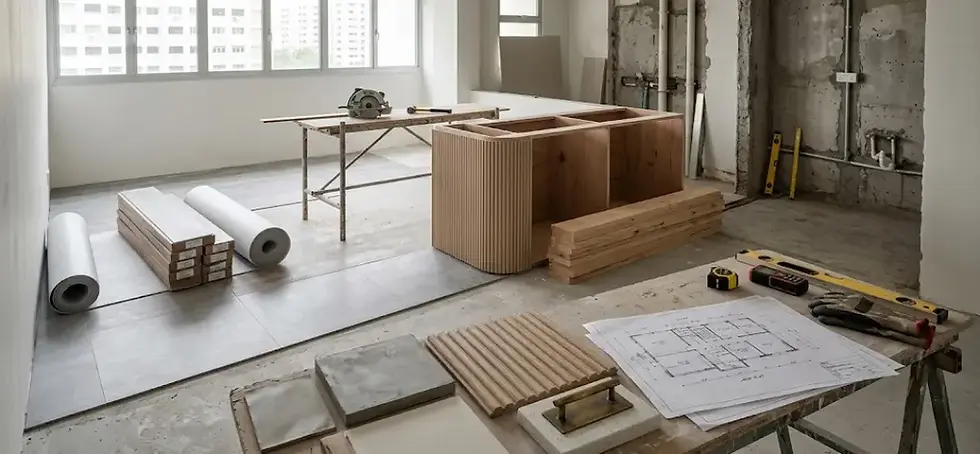
Common Renovation Pitfalls to Avoid in Singapore
Over-customizing: While built-in furniture looks great, too much of it can make a space feel cramped and limit your flexibility to rearrange furniture in the future.
Ignoring Lighting: Many homeowners rely solely on downlights. A lack of layered lighting can make a beautifully designed home feel flat and uninviting.
Skimping on Hardware: A cheap hinge or drawer runner will fail long before the cabinet itself. Invest in quality hardware like Blum or Hettich.
Poor Communication: Ensure you have a dedicated WhatsApp group with your ID or contractor. Document all changes and variations in writing to avoid disputes later.
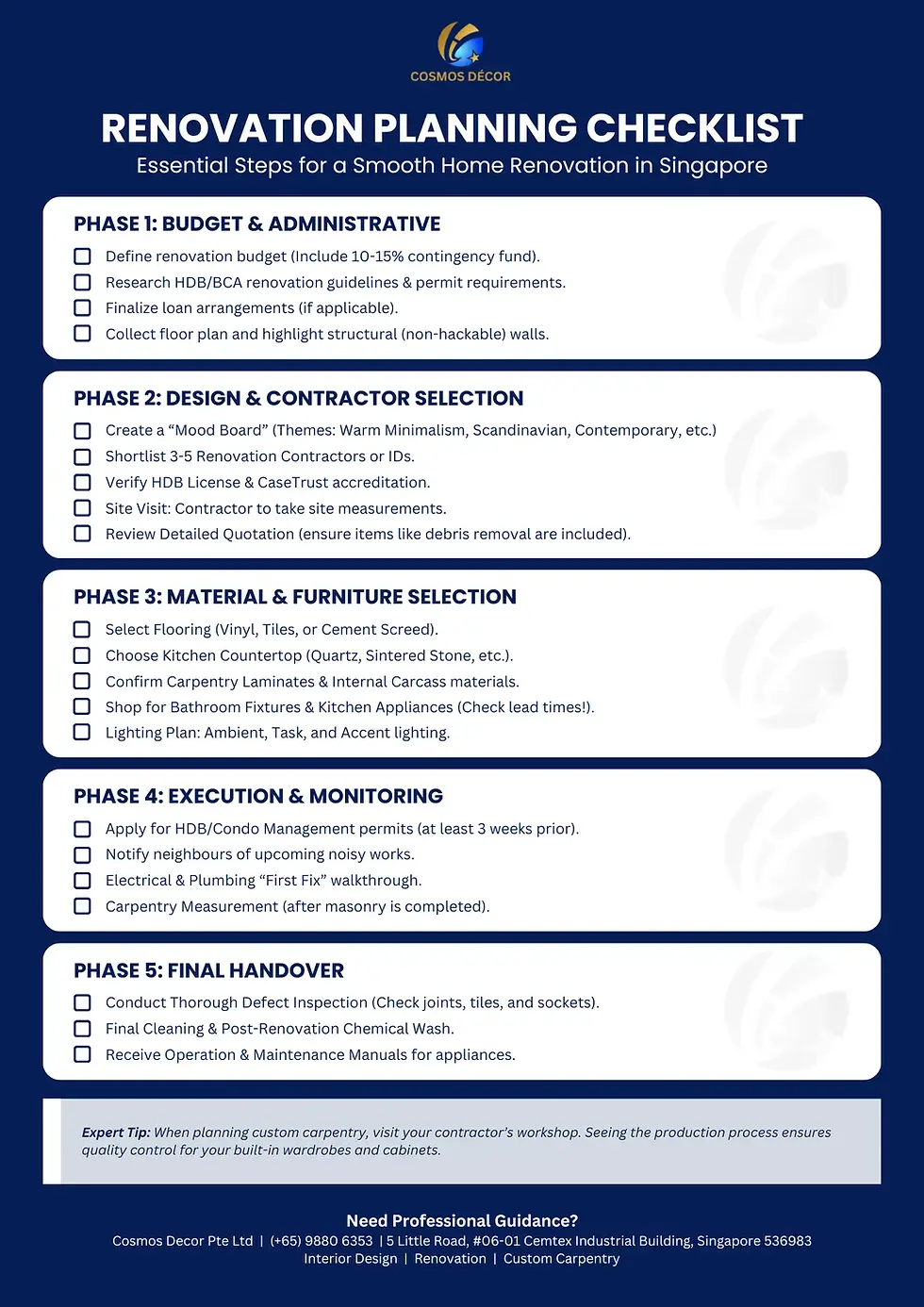
The Ultimate Singapore Renovation Checklist
Planning is the difference between a dream home and a renovation nightmare. We’ve consolidated all the technical requirements, HDB rules, and budgeting tips into a single, easy-to-use PDF. This checklist is a living document that you can take with you to meetings with contractors and IDs.
Why Choose Cosmos Decor for Your Singapore Renovation?
At Cosmos Decor, we don't just build houses; we craft lifestyle spaces. As a leading renovation contractor in Singapore, we combine the creative vision of an interior design firm with the precision of a direct carpentry specialist. We understand the local landscape from the intricacies of HDB BTO layouts to the high standards of luxury condo residents.
The Cosmos Decor Advantage:
In-House Carpentry Factory: Our 17,400 sqft facility in Defu Industrial City is where the magic happens. By manufacturing our own carpentry, we eliminate the middleman, ensuring your custom cabinets, wardrobes, and feature walls are built to last using 100% solid plywood and premium laminates.
Expert Project Management: We take the stress out of the process. From applying for HDB/BCA permits to coordinating various trades, our project managers ensure your renovation stays on track and within budget.
Human-Centric Design: We specialize in Tactile Luxury and Warm Minimalism. We believe your home should be a reflection of your personality, designed with your daily routines in mind.
Transparent Pricing: No hidden costs. Our quotations are detailed and transparent, ensuring you know exactly where every dollar is going.
Ready to start your renovation journey?
Don't settle for "textbook" designs or unreliable contractors. Let’s create a space that is uniquely yours, built with quality and integrity.

You May Also Like:


Comments