
Open‑Concept Living for Singapore Homes: Pros, Cons, and Design Tips

Updated: Dec 19, 2025

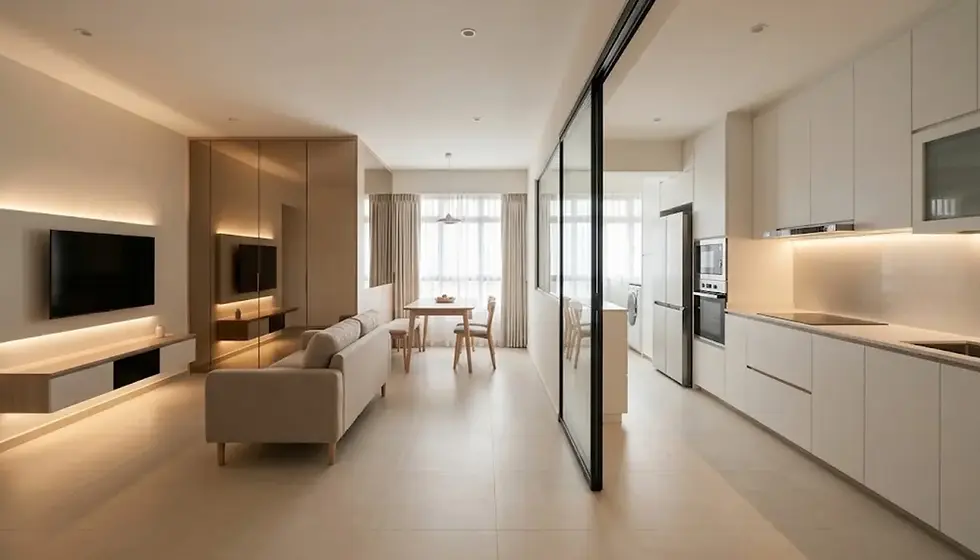
In Singapore where HDBs, BTO flats, and condominiums often come with limited square footage, so the concept of “open‑concept living” is gaining popularity. Many homeowners are choosing to tear down internal walls and adopt an open‑plan layout that combines living, dining, and kitchen areas into one seamless space.
Why the surge in interest? Because open‑concept living unlocks creative possibilities: it maximizes space, improves natural light, and appeals to modern, minimalist tastes. But it’s not without trade‑offs. In this article, we explore the pros and cons of open‑concept living in Singapore homes, dig into design tips to make it work well, and highlight when it’s a good fit and when it might not be.
If you’re considering renovation or custom carpentry, this is a must‑read.
What Does “Open‑Concept Living” Mean?
Open‑concept living (also called “open‑plan layout” or “open‑concept layout”) refers to a home layout where interior walls and partitions between main living areas where often kitchen, dining, and living rooms are removed or minimized, resulting in a large shared space instead of distinctly separated rooms.
In a Singapore context, whether you live in a modest HDB flat, a BTO unit, or a compact condo, this design approach is especially popular. Instead of small, boxed‑in rooms, open‑concept planning turns your home into a fluid, multifunctional living space.

✅ Pros of Open‑Concept Living for Singapore Homes
Here are the major advantages of open‑concept living especially relevant for Singapore households.
Spacious Feel & Space Maximization
One of the biggest draws of open‑concept living is maximizing perceived space. By removing interior walls and partitions, even a compact flat can feel much larger, airier, and less claustrophobic.
For small HDB flats or BTO units, this visual expansion can make a big difference by turning tight layouts into comfortable, open‑feeling homes.
Better Natural Light & Airflow
With fewer walls blocking windows, natural light can flow more freely across living spaces. This boosts brightness and creates a lighter, more welcoming atmosphere which is a big benefit in Singapore’s tropical climate, where good ventilation and natural light can enhance comfort.
Similarly, airflow and ventilation can improve: air circulates more easily across the open area, which can help with cooling and comfort (especially in flats without many internal partitions).
Flexible & Versatile Layout — Multipurpose Living
Open‑concept layouts are inherently flexible. Because the space isn’t rigidly divided, you can reconfigure furniture, décor, or zones to suit changing needs by dining, entertaining guests, work-from-home setups, kids’ play areas, or even a casual living + dining + kitchen arrangement.
This versatility is ideal for modern Singapore living, where families might need to maximize space, adapt to evolving lifestyles, or host friends occasionally.
Improved Social Interaction & Family Bonding
With walls removed, communication becomes easier: you can cook in the kitchen, chat with family in the living room, or supervise kids while working or relaxing. This seamless connectivity encourages togetherness and social interaction.
If you love hosting friends or family gatherings which is common in Singapore households, an open layout helps create a more open, inclusive environment.
Contemporary, Modern Aesthetic & Resale Appeal
Open‑concept homes often deliver a modern, minimalist aesthetic: clean lines, uncluttered spaces, and a sense of openness that appeals to younger couples, professionals, or newly married homeowners.
Moreover, flexible open layouts tend to have good resale appeal. Many buyers especially younger ones — value space, light, and openness, making open‑concept flats more attractive on the market.

⚠️Cons & Potential Drawbacks of Open‑Concept Living (Especially in Singapore)
Despite its many perks, open‑concept living isn’t perfect. Here are the main challenges and trade‑offs you should be aware of before starting renovation.
Lack of Privacy & Noise Issues
One of the most significant downsides: lack of privacy. Without walls separating areas, it’s harder to find quiet, private corners whether for work, rest, or alone time. This can be problematic especially for families, roommates, or multi‑generation households.
Noise travels easily across open spaces. Sounds from cooking, TV, conversations, or children playing can carry across the home, making it hard to concentrate or relax.
Cooking Odors, Heat & Air‑Conditioning Challenges
In a typical Singapore flat (condo or HDB), cooking can generate strong smells, grease, and humidity. In an open kitchen, these odors spread quickly into living and dining areas by making the space feel stuffy or oily over time, especially if there’s no strong ventilation or exhaust.
Because the space is larger and more continuous, air‑conditioning or ventilation systems may need to work harder to keep the environment comfortable. This can lead to increased energy consumption and cost.
Visibility of Clutter & Harder to Maintain Cleanliness
With everything in view — kitchen, living, dining if clutter becomes more noticeable. Mess from cooking, dishes, or general use cannot be hidden behind walls; this means keeping the home tidy requires more discipline and frequent cleaning.
Open layouts also mean fewer walls to place shelves or built-in storage which may result in storage constraints, especially in small flats where hidden storage is essential.
Difficulties in Defining Distinct Zones & Interior Design Challenges
In a traditional layout, each room has a clear function and style. With open‑concept living, defining zones (living, dining, kitchen, work, etc.) becomes more challenging especially if the home is compact. Without proper planning, the result may feel disjointed or chaotic.
Balancing aesthetics and functionality, e.g. blending kitchen cabinetry with living‑room décor, integrating furniture styles, or ensuring smooth traffic flow which requires careful design, which may not be straightforward for first-time homeowners.
Design Tips & Best Practices: How to Make Open‑Concept Living Work (Especially in Singapore Flats)
If you decide to go the open-concept route, here are some design tips, long‑tail keywords, and strategies especially relevant for Singapore homes to ensure your renovation yields a home that’s functional, beautiful, and comfortable.
1. Define Zones Using Furniture, Rugs, or Low Dividers (Not Walls)
Instead of walls, use rugs, sofas, low-profile shelving, room dividers or modular furniture to subtly delineate zones (living area, dining, kitchen, study corner). This retains openness while giving each zone its own identity.
For example: place a rug under the sofa to define the living area; use an island or breakfast bar to transition between kitchen and dining areas; or place a bookcase as a partial divider.
2. Invest in Smart & Built‑in Storage / Custom Carpentry
Since open-concept living reduces built-in wall space for storage, it’s essential to plan for smart storage from the start — built-in cabinets, hidden cupboards, multifunctional furniture (storage ottomans, benches, etc.) are a must for HDBs, BTO flats, or small condos in Singapore.
Custom carpentry can help optimize space: under‑sofa storage, built‑in wardrobes, integrated cabinetry along walls that remain, these help keep clutter out of sight and maintain the minimalist aesthetic.
3. Use Good Ventilation & Exhaust Systems for Open Kitchens
If your open-concept layout includes a kitchen, make sure to invest in a strong cooker hood or exhaust fan to manage cooking smells, moisture, and grease. This is especially important in Singapore, where humidity and frequent cooking can cause odor to linger.
Also consider layout: position the kitchen where windows or service yards are nearby to aid ventilation.
4. Plan for Lighting & Airflow — Think Natural Light, Ventilation, and Air‑Conditioning
Take advantage of natural light by keeping windows unobstructed, using light-colored walls, and placing frequently used areas (living, dining) closer to windows. This brightens up the space and reduces reliance on artificial lighting.
For airflow and temperature control, strategic air‑con placement, ceiling fans, and ventilation planning are critical, this ensures your open layout remains comfortable in Singapore’s tropical climate.
5. Choose a Cohesive Interior Style and Flexible Furniture Layout
Because the entire home is visually connected, it’s important to choose a cohesive interior design style whether minimalist, modern, Scandinavian, or contemporary and maintain consistency across zones (living, dining, kitchen). This helps the home feel unified, stylish, and thoughtfully designed.
Also consider flexible furniture layout: modular furniture, multi‑purpose pieces (e.g., extendable dining tables, foldable desks) help adapt the space for different uses (work-from-home, dining, entertaining).
6. Maintain Cleanliness & Organization And Embrace Minimalism
Open‑concept homes show mess and clutter more easily than traditional layouts. Cultivating a minimalist mindset helps less clutter, fewer unnecessary decorations, and regular cleaning schedules will maintain the airy, open feel.
Adopt “less is more” in décor. Use hidden storage solutions, and only keep essentials visible.
7. Think Through Your Lifestyle: Is Open‑Concept Right for You?
Before committing, consider your household’s lifestyle. If you value privacy, quiet corners, separate rooms, or have children, live‑in helpers, or frequent visitors, open‑concept may present challenges. On the other hand, if you enjoy hosting, family interaction, flexible living, open‑concept can be a great fit.
Also think about cooking habits: if you cook frequently and heavily (deep frying, strong aromas), an enclosed kitchen might still make sense.
Is Open‑Concept a Good Fit for Different Singapore Home Types?
Here’s a quick look at how open‑concept living might suit different housing types common in Singapore:
Housing Type | Suitability of Open-Concept Living | Key Considerations |
Small HDB flats / BTO units | ✅ Very suitable - helps maximize space and light, makes flat feel bigger | Must plan custom carpentry carefully; need smart storage to avoid clutter |
Condominiums / Small to mid-size condos | ✅ Good - aligns with modern lifestyle, appealing for young couples / Professionals | Ensure ventilation, A/C circulation; plan cohesive decor and layout |
Larger HDB Flats / 4-5 room / Multi-gen homes | ⚠️Mixed - open-concept may reduce privacy in larger households | Consider hybrid layout: open living/dining but closed bedrooms/private zones |
Landed / Spacious homes | ✅ / ⚠️ Flexible - open-concept can give airy luxury feel; but might lose room definition | Good for family homes with dedicated bedrooms; need to balance openness with zones for different activities |
Common Mistakes to Avoid When Renovating for Open‑Concept Living
Transitioning to an open‑concept layout isn’t just about knocking down walls. Poor planning can result in awkward spaces, lack of storage, clutter, or harsh lighting. Here are mistakes to watch out for:
Doing structural changes without checking ventilation / airflow — failing to plan for air‑con, windows, or exhaust systems can lead to poor ventilation, heat, or odor issues.
Not designing sufficient storage or built‑in cabinetry — open layouts expose clutter; without hidden storage, the space will lose its minimalist charm.
Using mismatched furniture styles or sizes — since zones flow into each other visually, inconsistent furniture will make the space look chaotic.
Poor lighting design — relying solely on overhead lights or a single light source can make areas look flat or unwelcoming. Instead, aim for layered lighting (ambient, task, accent).
Ignoring lifestyle needs — e.g. if you need privacy for work, rest, or children, an expansive open space may not be ideal without thoughtful zoning.
Why Open‑Concept Living + Custom Carpentry from Cosmos Decor Makes Sense
At Cosmos Decor, we specialize in renovation and custom carpentry for Singapore homes which makes us uniquely positioned to help you execute an open‑concept layout that balances aesthetics, functionality, and comfort.
We design concealed storage, built-in cabinetry, and multifunctional furniture to help you maintain a clutter‑free, minimalistic open home.
We advise on layout planning, ventilation, lighting, and airflow which is important in high‑humidity tropical climate like Singapore’s.
We balance open‑plan flow with practical living needs (privacy, cooking, cleaning) to ensure the space remains comfortable for everyday living.
Is Open‑Concept Living Right for You?
Open‑concept living can offer a fresh, modern, and spacious home environment which is particularly well‑suited for smaller HDB flats, BTO units, or condos in Singapore. The design promotes natural light, social interaction, flexible living, and a contemporary aesthetic. At the same time, it comes with trade‑offs: reduced privacy, noise, potential odor/ventilation issues, and demands high discipline in cleanliness and organization.
If you value openness, light, and flexible living — and are okay with thoughtful planning and regular upkeep, then open‑concept living could be a fantastic fit. On the other hand, if privacy, separation of zones, or heavy cooking are your priority, consider a hybrid layout or partial openness for the best of both worlds.
Considering a renovation or custom carpentry for an open‑concept layout? Cosmos Decor has the expertise to guide you from space planning and carpentry to lighting, ventilation, and final execution. Get in touch with Cosmos Decor to transform your Singapore home into an open‑concept haven that’s functional, stylish, and tailored to your lifestyle.

You May Also Like:


Comments