
The Ultimate Guide to Low-Formaldehyde Carpentry (E0 & E1) in Singapore: Safeguarding Your Home's Air Quality

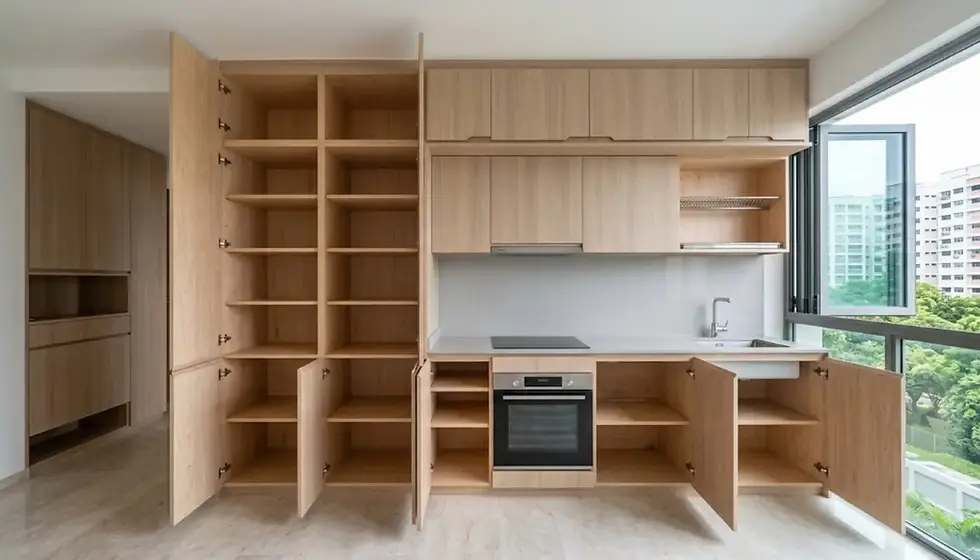
When you collect the keys to your new HDB BTO, resale unit, or private condo in Singapore, custom built-in carpentry is almost always top of your renovation wish list. From floor-to-ceiling master bedroom wardrobes and full-height shoe cabinets to custom kitchen islands, carpentry defines how your home looks and functions of a modern Singapore home.
However, behind the sleek laminate finishes and soft-closing cabinet hinges lies a hidden issue many first-time homeowners overlook until it's too late: indoor air quality and volatile organic compounds (VOCs).
Have you ever walked into a freshly renovated flat and felt your eyes sting, your throat scratch, or noticed a harsh, chemical smell? That is signature sign of formaldehyde off-gassing.
If you are currently getting quotes from an interior designer or a direct renovation contractor in Singapore, specifying low-formaldehyde carpentry specifically E0 and E1 grade plywood and engineered wood which is one of the most practical decisions you can make for your family's health.
In this comprehensive guide, Cosmos Decor breaks down everything you need to know about low-formaldehyde carpentry, emission grades (E0, E1, E2, ENF), realistic cost expectations in Singapore, and how to work with a trustworthy renovation contractor in Singapore to ensure your home stays safe, durable, and toxin-free.
[Table of Contents]
What is Formaldehyde, and Why Is It in Your Built-in Carpentry?
Formaldehyde is a naturally occurring organic compound, but in industrial manufacturing, it is a key ingredient in synthetic resins specifically urea-formaldehyde (UF) glues. These adhesives are cheap, highly effective, and used to bind wood fibers, chips, or veneers together to build engineered wood products like:
Plywood: Standard cross-laminated timber core.
Medium-Density Fibreboard (MDF): Compressed wood fibers, commonly used for feature wall panels and cabinet doors.
Particleboard / Chipboard: Compressed wood chips, widely used in flat-pack modular furniture.
How Singapore's Climate Makes It Worse
While formaldehyde off-gassing occurs everywhere, Singapore's heat and humidity environment significantly worsens the problem.
Formaldehyde off-gassing speeds up significantly in high temperatures and humid conditions. In Singapore, where ambient indoor temperatures regularly sit around 30°C to 33°C with relative humidity well above 70%, standard grade carpentry releases formaldehyde much faster than it would in cooler climates.
When you close all your windows and turn on the air conditioner in your bedroom at night, those trapped chemical fumes build up in a sealed room. Over time, exposure causes real issues:
Short-Term Symptoms: Stinging eyes, dry throat, persistent coughing, nausea, skin irritation, and sudden headaches.
Respiratory Triggers: Increased frequency of asthma attacks, bronchitis, and eczema reactions, particularly in young kids and elderly family members.
Long-Term Risks: Formaldehyde is officially classified as a Group 1 carcinogen by the World Health Organization (WHO) and the International Agency for Research on Cancer (IARC).

Decoding Carpentry Grades: E0, E1, E2 & ENF
When reviewing timber options with your renovation contractor in Singapore, you'll hear terms like E0 or E1 thrown around. The "E" rating stands for Emission Class which is a metric measuring how much formaldehyde gas a board releases under laboratory conditions.
Here's how the main ratings compare:
Carpentry Grade | Emission Limit (Standard Test) | What It Means for Singapore Homes | Where to Use It |
E2 | >0.124mg/m³ (or >1.5mg/L) | High Fumes: Cheap, unrated industrial boards. Off-gasses heavily in local heat. | Outdoor structures or temporary site hoardings. Avoid inside the house. |
E1 | ≤0.124mg/m³ (European/Chinese Standard) | Baseline standard: Safe for open, well-ventilated areas, but fumes can still build up in locked AC rooms. | Living room feature walls, TV consoles, display shelves. |
E0 | ≤0.050mg/m³ (Rougly 50% lower than E1) | The Sweet Spot: Extremely low off-gassing. Strongly recommended by modern Singapore contractors. | Bedrooms, nurseries, walk-in wardrobes, kitchen carcasses. |
ENF | ≤0.025mg/m³ (Enviro-No-Formaldehyde) | Ultra-Low: Virtually zero added formaldehyde Premium grade. | Homes with newborns, pregnant mothers, or severe asthmatics. |
Fast Check: "E0 means 100% formaldehyde-free." False. All natural wood contains tiny traces of natural formaldehyde. E0 simply means no significant synthetic urea-formaldehyde resins were added during manufacturing of the plywood.
Why You Should Insist on E0/E1 Plywood for Your Singapore Renovation
Choosing low-formaldehyde materials isn't just a trend, it's a long-term practical investment in your daily living conditions. Here are 4 reasons why every Singapore homeowners should prioritize E0 or E1 carpentry:
Move In Sooner Without Waiting Weeks
With standard E2 carpentry, renovation contractors often tell homeowners to leave windows wide open, place charcoal bags inside cabinets, and wait 4 to 8 weeks before moving in. With certified E0 low-formaldehyde plywood, off-gassing is minimal from day one, meaning you can move into your new BTO or resale flat right after handover without stinging eyes or harsh chemical smells.
Protect Kids and Elderly Family Members
Infants and young children breathe in more air per kilogram of body weight than adults. Because their respiratory systems are still developing, exposure to high VOC levels inside enclosed bedrooms can trigger persistent allergies, chronic night coughing, and eczema flare-ups. Specifying E0 carpentry in bedrooms and nursery spaces keeps the air clean while they sleep.
Better Moisture Resistance & Long-Term Durability
Many homeowners worry that low-formaldehyde plywood is weaker because it uses less industrial glue. It's actually the opposite. Premium E0 plywood panels use advanced polyurethane (PUR) or soy-based bio-resins with higher-density core veneers. In Singapore's humid climate, these advanced glues resist warping, swelling, and delamination which making your kitchen cabinets and bathrooms vanities more durable.
Aligning with NEA's Indoor Air Quality Standards
Singapore's National Environment Agency (NEA) keeps tightening standards around indoor volatile organic compounds. Following restrictions on formaldehyde in paints, the market is moving quickly toward sustainable and green-certified building materials. Choosing E0 and E1 carpentry helps future-proof your property value while keeping your home aligned with eco-friendly living standards.
Realistic Cost Breakdown: Is Low-Formaldehyde Carpentry Worth the Price?
One of the most common questions homeowners ask a renovation contractor in Singapore is: "How much extra will E0 or E1 carpentry cost?"
In the past, low-formaldehyde materials carried a heavy premium price markup because it was specially imported. Today, as demand in Singapore has surged, major local suppliers across Singapore stock high-grade E0 and E1 plywood as standard inventory.
Typical Cost Differences in Singapore:
Raw Material Cost: E0 plywood costs roughly 15% to 25% more per sheet than E1 plywood.
Overall Renovation Budget: Since your carpentry quote covers skilled labor, laminates, hardware (like Blum drawer runners), transport, and installation, upgrading your core structure to E0 only adds about 5% to 8% to your overall carpentry bill.
Cost Estimate for a Typical 4-Room HDB BTO Flat:
Carpentry Scope | Standard E2/Uncertified Plywood | Upgraded E0 Low-Formaldehyde Plywood | Price Difference |
Kitchen Cabinets (20 feet) | $2,400 - $2,800 | $2,700 - $3,150 | +$300 - $350 |
Master Bedroom Wardrobe (6 feet) | $1,600 - $1,900 | $1,800 - $2,100 | +$200 - $200 |
Living Room TV Console & Feature Wall | $1,800 - $2,200 | $2,000 - $2,400 | +$200 - $200 |
Shoe Cabinet & DB Box Cabinet | $900 - $1,200 | $1,000 - $1,350 | +$100 - $150 |
Estimated Total Carpentry | $6,700 - $8,100 | $7,500 - $9,000 | +$800 - $900 |
Spending an extra $800 to $1,500 across an entire home renovation is a small price to pay for cleaner air and long-term health.
Smart Budgeting: How to Allocate Your Carpentry Budget
If you're renovating on a tight renovation budget, you don't necessarily need top-tier wood in every single corner of the house. An experienced renovation contractor in Singapore will advise you to allocate your renovation budget strategically based on room exposure and airflow:
Priority 1 (Bedrooms & Nurseries - Go For E0): Enclosed rooms with the aircon running all night need to cleanest material, as trapped fumes accumulate fast.
Priority 2 (Kitchen - Go For E0): Heat from cooking stoves and ovens accelerates formaldehyde gas release from cabinet carcasses.
Priority 3 (Living Room & Foyers - E1 is Fine): Open-concept areas with regular cross-ventilation, making E1 boards a cost-effective choice.
Priority 4 (Balcony & Service Yard - Standard Plywood): Well-ventilated outdoor areas don't trap fumes, making standard grade wood acceptable here.

4 Essential Checklist Items Before Signing a Carpentry Contract
To make sure you're getting genuine low-formaldehyde wood and not just marketing buzzwords, go though this checklist before signing with any renovation contractor in Singapore:
Request Specific Descriptions Written Into the Quotation
Avoid vague line items like "high-grade solid plywood" or "eco-friendly plywood" in your renovation contract. Make sure the contract spells it out clearly:
"Internal carcasses fabricated using 18mm E0-certified low-formaldehyde moisture-resistant plywood."
Ask for Test Reports and Certificates
Request mill test reports or certificates from your renovation contractor or interior designer. Reliable contractors source materials tested by recognized bodies like:
Singapore Green Labelling Scheme (SGLS)
TÜV SÜD PSB Singapore
SGS Certification (GB/T 39600, CARB P2, or EN 717-1 standard)
Check the Raw Material Stamps When They Arrive On-Site
When wood panels arrive at your HDB BTO or condo unit before installation, take a look at the raw plywood boards. Authentic E0 and E1 boards usually have factory-printed ink stamps along the edges showing the batch number and rating.
Ensure Full Edge-Banding & Sealed Backings
Even when using E1 or E0 plywood, unsealed cut edges release fumes much faster. Make sure your contractor applies ABS edge-banding around all four sides of cabinet doors and shelves, and seals backing boards that sit flush against your concrete walls.
Practical Ways to Clear Out Formaldehyde After Handover
Once the renovation is complete, try these simple steps to minimize residual VOCs and ensure optimal indoor air quality before moving your family in:
Try the "Bake-Out" Method: Close all windows and doors during hot afternoons so indoor heat forces fumes out of built-in cabinets. In the evening, open every window and turn on standing fans to blow the trapped chemical fumes right out.
Leave Cabinet Doors Open: Keep all wardrobe doors, kitchen drawers, and shoe cabinets fully open for the first two weeks so air circulates freely inside raw cabinet interiors.
Use an Activated Carbon Air Purifier: Basic HEPA filters capture dust, but they don't trap gaseous VOCs like formaldehyde. Make sure your air purifier has a thick activated carbon filter layer to absorb airborne formaldehyde.
Keep Humidity Levels Down: Use your air conditioner's 'Dry Mode' or set up a dehumidifier. Keeping humidity under 60% slows down the chemical reaction that causes wood adhesives to release fumes.
Build a Heathier Home with Cosmos Decor
At Cosmos Decor, we believe a great-looking home shouldn't compromise your health. As an established interior design firm and direct renovation contractor in Singapore, we believe in honest advice and straightforward material choices.
We use certified E0 and E1 low-formaldehyde carpentry, low-VOC paints, and eco-tested laminates to build homes that look clean, feel comfortable, and keep your indoor air safe for years to come.
Whether you're collecting keys for an HDB BTO, renovating a resale unit, or upgrading your private condo, our team is here to guide you through clear cost breakdowns, practical designs, and quality materials.
Frequently Asked Questions (FAQ)
Q1: Can I retroactively seal old carpentry if it is emitting formaldehyde?
Yes. If existing cabinets off-gas fumes, you can apply VOC-blocking clear sealants over exposed interior wood edges or line drawer interiors with aluminum foil sealing tape. However, installing certified E0 boards during your initial renovation remains the most effective solution.
Q2: Is E0 plywood stronger than regular plywood?
E0 plywood is structurally as strong as, or stronger than, conventional plywood. It uses advanced bonding agents like Polyurethane (PUR) glues that offer excellent tensile strength and moisture resistance in high-humidity areas like kitchens and bathrooms.
Q3: Does vinyl flooring emit formaldehyde like carpentry does?
Vinyl flooring (LVT/SPC) is made primarily from synthetic PVC plastic rather than wood fibers, so formaldehyde emissions are typically low or non-existent. However, vinyl flooring can emit other VOCs or phthalates. Look for FloorScore® certification or Singapore Green Building Council (SGBC) labels when choosing flooring.


Comments