
Vinyl Flooring vs. Large Format Tiles: The Ultimate Singapore Guide to HDB Floor Hacking and Overlaying


Choosing the right flooring for your home is one of the most critical decisions in any Singapore home renovation. Whether you’ve just collected your keys to a new BTO or are planning a resale HDB makeover, the debate usually boils down to two heavyweights: Vinyl Flooring vs. Large Format Porcelain Tiles.
In 2026, the trend has shifted beyond just "cheap vs. expensive." Homeowners are now looking for long-term value, lifestyle compatibility, and that elusive "seamless luxury look." Should you opt for the cost-effective overlaying vinyl method, or invest in HDB floor hacking for grand, large format tiles?
This comprehensive guide breaks down everything you need to know about durability, maintenance, and the real costs of flooring in Singapore.

1. Vinyl Flooring: The Budget-Friendly Comfort King
Vinyl has surged in popularity across Singaporean households, especially for those looking to avoid the mess of hacking. Modern Luxury Vinyl Planks (LVP) and Stone Plastic Composite (SPC) flooring have evolved to mimic the authentic grain of oak, walnut, and even marble.
Why Homeowners Love Vinyl
Warmth and Comfort: Unlike tiles, vinyl has a "warm" feel. It’s softer underfoot, making it the best flooring for families with toddlers or elderly parents who need a bit of "give" to prevent joint fatigue.
Cost-Effective Overlaying: The biggest draw is the ability to overlay vinyl on existing tiles. This eliminates the need for expensive HDB floor hacking permits and labor costs.
Water-Resistant & Termite-Proof: High-quality SPC vinyl is 100% waterproof, making it a viable option for dry kitchens and living areas.
The Downside of Vinyl
While durable, vinyl is susceptible to scratches from heavy furniture and can warp if exposed to extreme direct sunlight over many years. It also has a shorter lifespan (typically 10–15 years) compared to porcelain.

2. Large Format Porcelain Tiles: The Seamless Luxury Standard
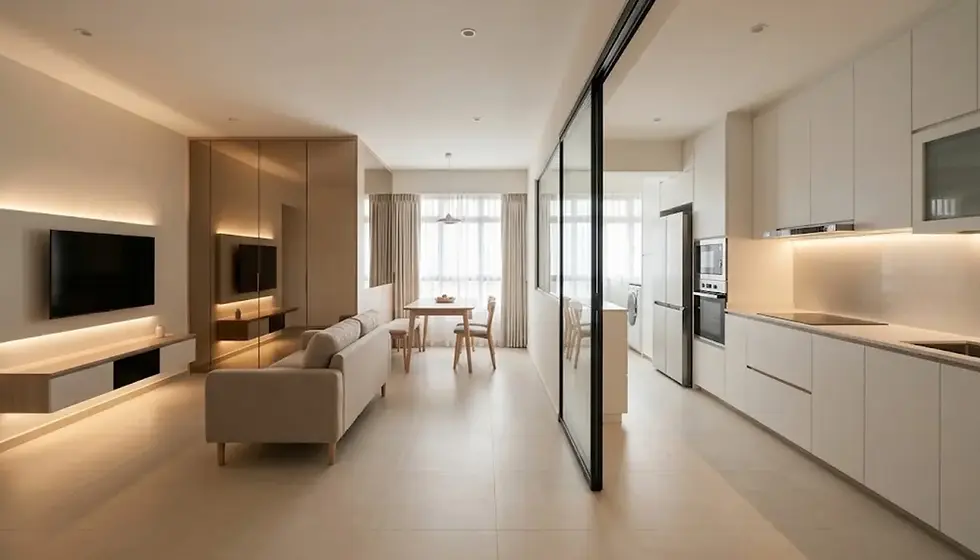
If you’re scrolling through interior design portfolios and see sprawling, jointless floors, you’re likely looking at large format porcelain tiles. These tiles, often measuring 90x90cm or 60x120cm, minimize grout lines to create an expansive, high-end feel.
The Case for Porcelain Tiles
Extreme Durability: Porcelain is fired at higher temperatures than ceramic, making it incredibly dense and scratch-resistant. It is effectively "life-proof."
Luxury Aesthetics: Large format tiles reduce "visual noise." By having fewer grout lines, your living room looks significantly larger—a crucial hack for small HDB flats.
Hygiene and Maintenance: Porcelain is non-porous. It won't absorb spills, and it doesn't emit Volatile Organic Compounds (VOCs), which are a concern with some lower-grade synthetic materials.
The Trade-off
The primary hurdle is the cost of floor hacking and installation. Tiles require a cement screed base, and the labor for laying large format slabs is significantly higher due to the precision required to prevent "lippage" (uneven edges).
3. Head-to-Head Comparison: Vinyl vs. Large Format Tiles
Feature | Vinyl Flooring (SPC/LVP) | Large Format Porcelain Tiles |
Average Cost (PSF) | $3.00-$8.00 (Installed) | $12.00-$25.00 (Incl.Hacking/Screed) |
Installation Time | 2-3 Days (Fast) | 1-2 Weeks (Laborious) |
Durability | High (but can scratch/dent) | Maximum (Scratch & Heat proof) |
Underfoot Feel | Warm, soft, and quiet | Cold, hard, and reflective |
Maintenance | Very Easy (Sweep & Mop) | Easy (Grout needs deep cleaning) |
Lifespan | 10-15 Years | 30+ Years |
4. Local Context: HDB Floor Hacking vs. Overlaying
In Singapore, the decision is often driven by the HDB renovation rules.
When to choose HDB Floor Hacking:
If your resale flat has "hollow" sounding tiles or the existing floor is uneven, you must hack. Hacking allows you to start with a fresh cement screed, ensuring your new large format tiles are perfectly level. This is the preferred route for a "forever home" renovation.
When to choose Vinyl Overlaying:
If your current tiles are in good condition and you want to save roughly $3,000 to $6,000 on hacking and haulage fees, overlaying is the way to go. It is faster, cleaner, and perfect for BTO owners who want to change the "standard" developer tiles without a massive bill.
5. 2026 Flooring Trends: What’s Popular?
Homeowners are increasingly moving toward matte finishes and textured stone looks.
Travertine-look porcelain is a huge hit for those seeking a Mediterranean or "Japandi" vibe.
Herringbone vinyl layouts remain a top choice for adding character to bedrooms without the price tag of real parquet.
6. Maintenance Tips for Singapore Homes
Regardless of your choice, Singapore’s humidity requires specific care:
For Vinyl: Avoid using steam mops, as the intense heat can weaken the adhesive or core layers. Use a damp microfiber mop.
For Tiles: Invest in epoxy grout. Standard cement grout stains easily in high-traffic areas; epoxy grout is waterproof and stays the same color for years.
Conclusion: Which is Right for You?
The choice between vinyl flooring and large format tiles depends on your priorities. If you value a "warm" cozy home and want to keep your renovation budget under control, vinyl overlaying is a brilliant, stylish solution. However, if you are looking for an "indestructible" floor that screams luxury and adds significant resale value to your property, large format porcelain tiles are a superior long-term investment.
Choosing the right material is only half the battle—the quality of installation is what makes or breaks your floor. For expert advice on the best flooring solutions tailored to your HDB or condo, look no further.
To turn your dream home into a reality with precision and style, find Cosmos Decor Renovation Singapore for a consultation today.

You May Also Like:


Comments